


A Professional Team Formed to Share Knowledge and Methodologies
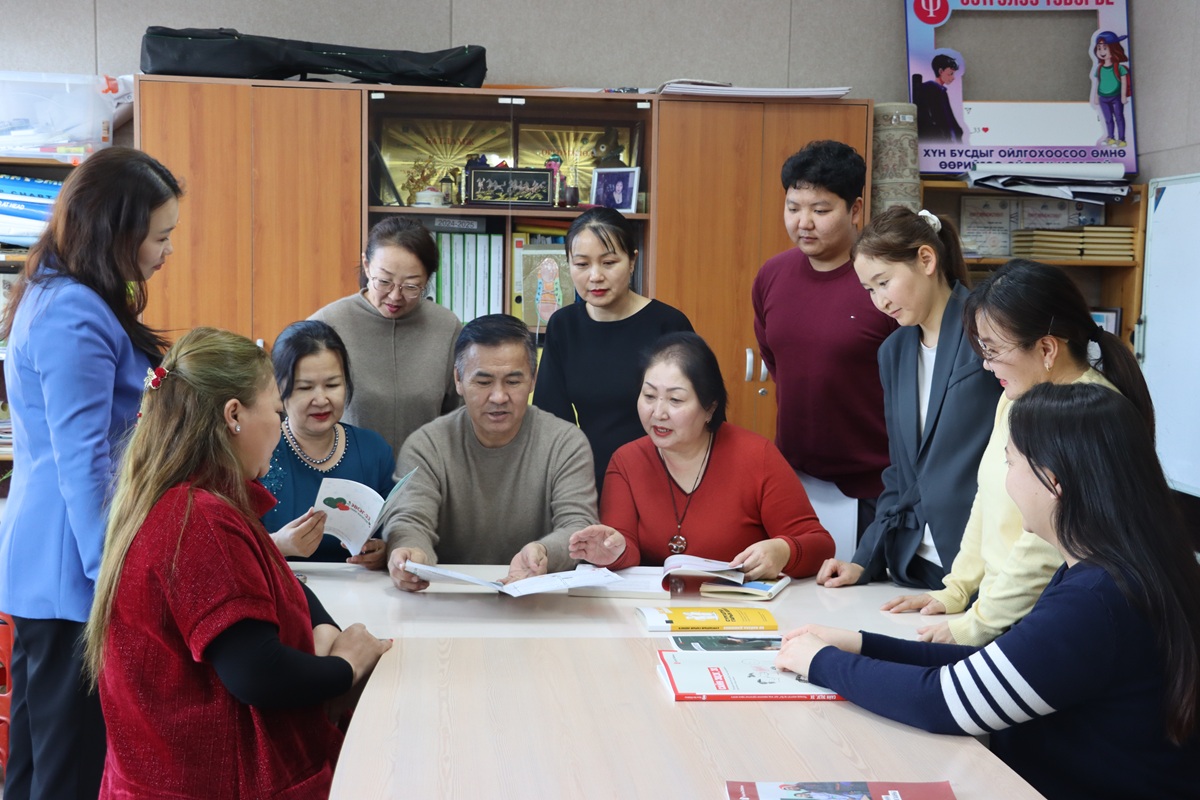
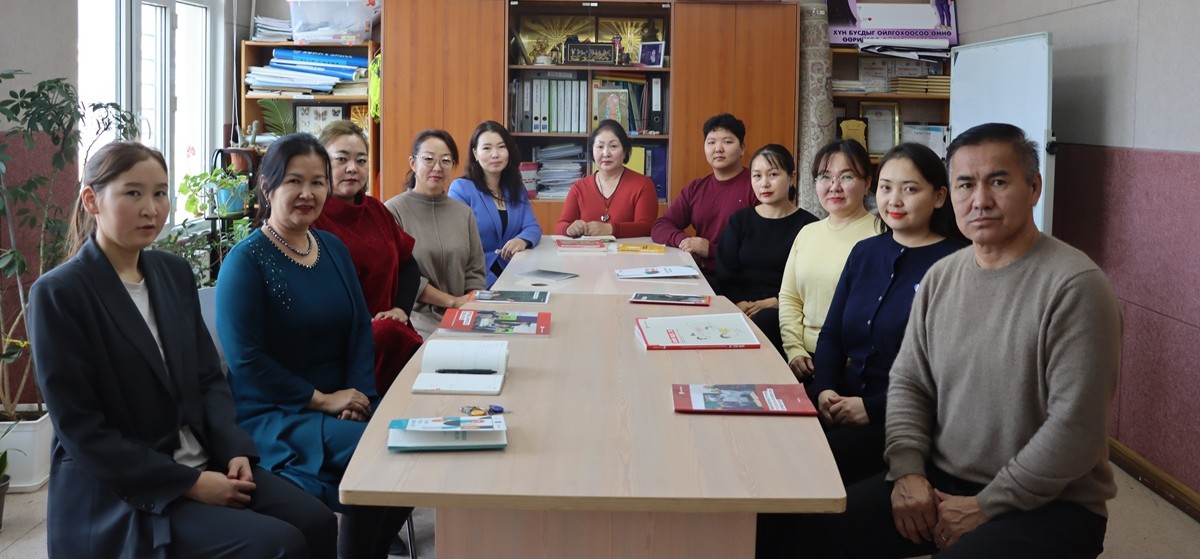
This academic year, more than 4,000 students are enrolled in 94 classes at School No.33. With 145 teachers and over 200 staff members, the school implements both educational and developmental activities. A dedicated PIU was established at the school to implement Save the Children’s “Establishing School-Based Child Protection Mechanism in Mongolia” project. The PIU consists of 14 members, including school principal N.Enkhbat, social workers N.Tsend and Sh.Bolor-Erdene, psychologist G.Natsag-Yum, training manager B.Sodontuya, primary school teachers Sh.Baasansuren and G.Oyun-Erdene, secondary school teachers R.Buyankhishig, D.Uyanga, and A.Agvaanjamts, and senior school teachers O.Ariunsaikhan, S.Najidmaa, and B.Kherlentuul.
When the PIU was established, members were selected from among the school’s 145 teachers based on their leadership qualities and ability to positively influence others, given the broad range of activities planned under the project. Teachers and staff who voluntarily joined the PIU have remained unchanged since its formation, ensuring stability and continuity. As a result, the members’ knowledge, skills, and experience have become well-coordinated, fostering strong teamwork and the effective exchange of expertise.
Child-focused activities and trainings are designed around children’s rights, consistently ensuring and supporting their participation. For example, knowledge and information gained through the “I Support My Friends” peer support program is shared among students, helping them learn how to support friends experiencing emotional difficulties and how to respond appropriately in cases of rights violations.
“The peer educators have significantly improved their ability to express their opinions, speak publicly, and interact with others. Since the project’s implementation, children’s participation has greatly increased. By influencing, advising, and supporting their peers, 13 new student clubs were established at our school last year, and these clubs have been organizing various volunteer activities” said teacher Sh.Baasansuren.
Under the Save the Children’s micro-project initiative , four project proposals from the school’s peer educators were selected. Building on the knowledge gained from the “I Support My Friends” program, they conducted sessions about “Healthy Friendships” for secondary and high school students, “Let’s Value Positive Relationships” for secondary classes, and “A Compassionate Childhood” for primary classes. . The peer educators also organized a “Let’s Inform and Be Informed” event, which reached more than 2,000 students.
S.Najidmaa, a history and social studies teacher, and a project trainer shared, “I learned methods teachers can use to take care of themselves. I now apply strategies to stay calm, interact appropriately with children, avoid bringing personal challenges into the workplace, and provide psychological support to my colleagues.”
Teacher R.Buyankhishig also became a trainer. Last year, she successfully guided her fourth group of primary students through graduation. “I learned a great deal from the ‘Establishing School-Based Child Protection Mechanism in Mongolia’ project. Combined with my 25 years of teaching experience, it provided very valuable insights. Many things I used to do without understanding their significance have now become meaningful practices. I have become more aware of the current challenges in the teaching and learning environment related to students’ age, physical development, and psychological needs, and I now understand how to address them. I realized that teachers also need to act as psychologists.” G. Oyun-Erdene, a primary school teacher, project team member, and trainer, shared, “Students, especially in the lower grades, have learned simple ways to take care of themselves. They are learning to drink water regularly, listen to music, eat nutritious meals, and share what they read with their classmates. These simple yet meaningful practices are taught through the ‘Let’s Be Humane’ campaign, helping students develop healthy habits. My students have even started doing meditation exercises before lessons begin.”
Teaching first-grade students, G.Oyun-Erdene, explained that classroom rules were created with student participation and used pictures for easy understanding. Even though the students are not yet proficient readers, they can recognize and follow the rules through the illustrations. “They learn to listen to others and greet their teacher and classmates,” she explained, emphasizing how the project helps children acquire essential habits from an early age. Over the three years of the project, G. Oyun-Erdene guided consistently applied the knowledge and skills she gained from the project in her teaching.
Within the framework of the project, parents also implemented two micro-projects. The school’s Parent Council organized “Empowering Our Future” for senior students, while parents of sixth-grade students organized “Unity 33 – Let’s Give Love,” providing participants with manuals and materials.
The school successfully implemented trainings such as “I Support My Friends,” “Safe Families,” “Supporting Students’ Learning and Development Through a Rights-Based Approach,” and “Preventing Children from Experiencing Violence.” The “Let’s Be Humane” campaign was also effectively carried out.
A workflow chart for child protection services was established, and, thanks to trainings and awareness activities, the reporting of children’s rights violations has improved. Previously, such violations often went unreported, and affected children did not know whom to turn to or how to respond, which sometimes led to poor decisions. Through participation in the Save the Children project, children have learned when their rights are violated, it is essential to report it and seek support and assistance from adults. This has been a particularly important achievement, explained social worker N. Tsend.
Over the past two years, the administration of School No. 33 has implemented significant measures to enhance child protection and support parents. One major initiative was the renovation and expansion of the school entrance area. Previously, the waiting hall was cramped and cold, which caused difficulties during the winter months-especially for parents of younger students. Now, parents can wait in a warm and comfortable environment while accessing information on children’s relationships and behavior from the wall-mounted boards. The school has made it a regular practice to display campaign posters, advice, and information for parents.
Risk assessments in collaboration with parents and students have been prioritized, highlighted by social worker Sh.Bolor-Erdene. Based on these assessments, protective nets were installed on all the third-floor windows, which had no windowsills. Cleaning and maintenance staff now use yellow triangular warning signs to reduce the risk of accidents. Student restrooms were renovated to be well-lit and equipped with mirrors. Outside the school, a bicycle parking area was created, and during the busy periods when school shifts change, the flow of students entering and exiting is managed separately. These and other measures guided by the risk assessment findings have created a safer and more child-friendly environment. School No.33 has also established a visitor registration system: all parents and guests entering the school are issued a “Visitor” ID card before being allowed inside. According to social worker N. Tsend this has been a major step forward in ensuring children’s safety.
Representatives from 14 other urban and rural schools participating in the project have visited School No.33 to exchange experiences. Officials from the donor organization and the UK Ambassador to Mongolia toured the school to observe its activities and outcomes, providing further motivation for the school team.
To sustain and expand the methodology of the project, the trainers have established a “Professional Development Group.” Through this group, the extensive knowledge and innovative practices from the project can be shared across generations, ensuring long-term impact and continuity.