


Japanese Ambassador Visited JMOFA Project Sites in Bayankhongor Province
On 25 May 2026, H.E. Mr. Igawahara Masaru, Ambassador of Japan to Mongolia, visited project sites in Bayankhongor Province under the project “Promoting Holistic, Sustainable and Inclusive Developmental Support in Early Childhood in Mongolia,” implemented by Save the Children Japan in Mongolia with the support of the Government of Japan through the Japanese Ministry of Foreign Affairs (JMOFA).
The delegation led by the Ambassador and representatives from the Embassy of Japan was accompanied by the Bayankhongor aimag local government, Mr. L. Bayan-Altai, Country Manager of Save the Children Japan in Mongolia, and project staff from Save the Children Japan in Mongolia. During the field visit, the delegation exchanged views with local stakeholders on the project’s progress and future cooperation.
The first visit was organized at the “Enkhburd” Family Health Center (FHC). The delegation received an overview of the project-supported activities implemented to strengthen child health and developmental support services. The visitors toured the “Child Health Check-up Room” and examination room established with project support and exchanged views with healthcare staff on the importance of accessible and quality early childhood developmental services.
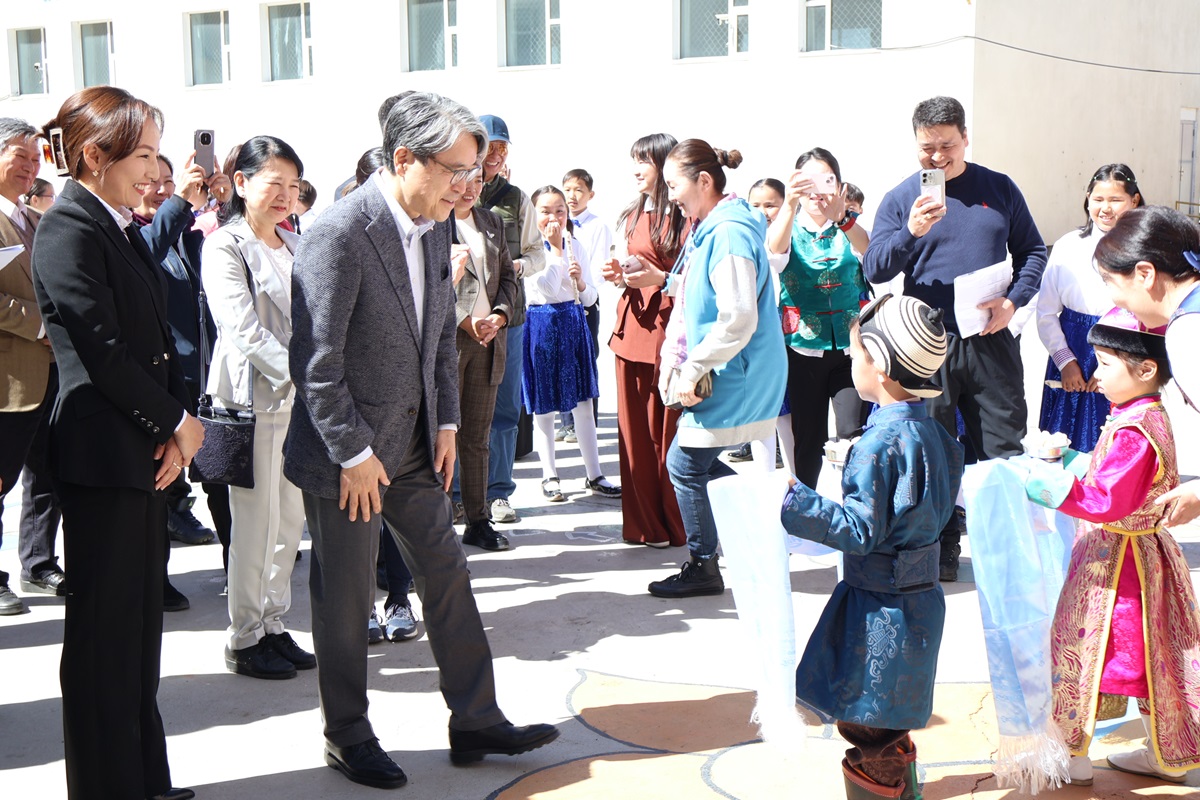
Kindergarten No. 1, Bayankhongor – Children traditionally welcoming the Ambassador with milk products
Mrs. E. Gunjinlkham, Director of the “Enkhburd” FHC, explained that the project had significantly strengthened the center’s capacity for early identification and developmental screening of young children. Through the project, the center received medical and developmental screening equipment, child-friendly furniture, toys, and educational materials, which improved the quality of services for children and caregivers. Health staff also received training on developmental screening, early intervention, referral systems, and communication with parents. The Director stated, “We are very pleased that this project has been implemented at our health center. We will continue working hard to ensure that every child benefits from the project. Although the project will end in 2027, we will continue striving to achieve 100 percent coverage of early identification screening at ages of 9,18 and 36.”
During the visit to the FHC, the Ambassador stated: “I am very happy to see that, through your efforts, the partnership between Save the Children and the Ministry of Foreign Affairs of Japan is making a meaningful impact at the community level. Children are our future, and it is our shared responsibility to create a healthy and bright future where every child can smile.”
The next stop of the visit was Kindergarten No. 1 in Bayankhongor aimag. During the visit, the Ambassador and accompanying guests were welcomed by the kindergarten staff and children with a traditional Mongolian dance performance. The kindergarten administration introduced its activities and shared progress achieved through the JMOFA-supported project. The delegation also visited the “Child Development Support Room” established with project support and observed classroom activities.
Mrs. Ts. Dolgorkham, Director of Kindergarten No. 1, explained that through the project, teachers and staff had strengthened their knowledge and practical skills in inclusive education, early childhood development, Individualized Education Plans (IEPs), and transition support for children with diverse developmental needs.
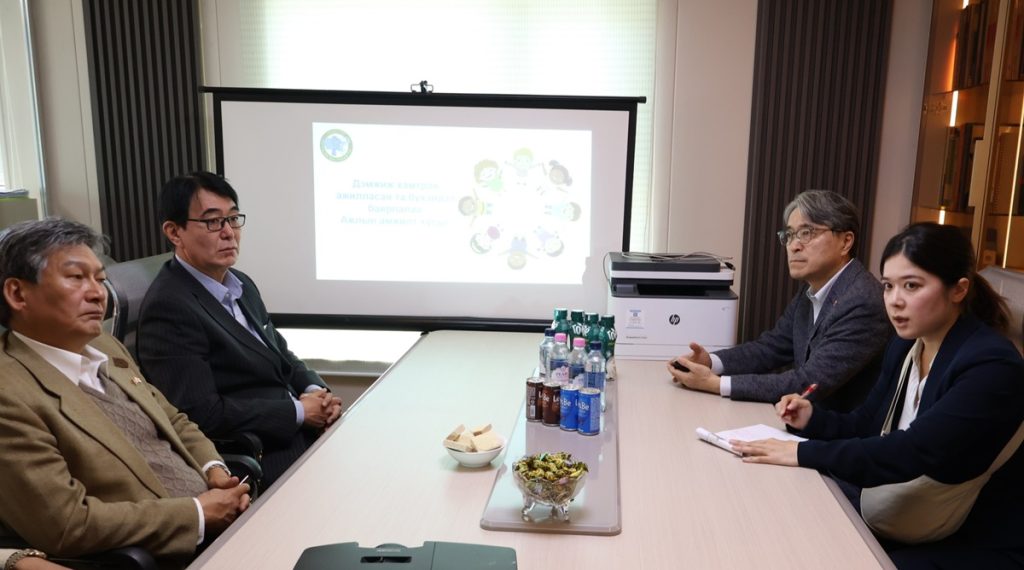
Enkhburd FHC – Presentation by the Director of the Family Health Center
She also highlighted that the kindergarten-school complex achieved compliance with the international ISO 21001:2021 standard in 2025. One of the key factors contributing to this achievement was the work implemented through the project, particularly in the areas of inclusive education for children with special needs, support for child development, collaboration with parents and caregivers, promotion of the professional development of teachers and staff, and support for children’s transition from kindergarten to primary school. These areas received particularly strong evaluations during the certification process, demonstrating the positive impact of the project on both the institution and the children.
H.E. Ambassador Igawahara Masaru noted, “The dance performance prepared by the children was truly wonderful. It even made me want to join and dance together with them. Thank you very much for such a warm welcome. Children are the future of Mongolia, and I hope their future will be as bright and beautiful as today’s sunny weather. It is very encouraging to see that more than 1,000 children are learning and developing happily through the support of Save the Children and the funding provided by the Ministry of Foreign Affairs of Japan.”
Since 2024, the project has been implemented in Ulaanbaatar city and selected provinces to strengthen early childhood development systems and improve access to early identification and intervention services for children aged 0–5 years, including children with developmental delays and disabilities. The project supports capacity building for health, education, and social protection professionals, improves accessibility of facilities, and promotes awareness among parents and caregivers on child development and inclusive support.
Save the Children Japan in Mongolia expressed its sincere appreciation to the Government of Japan, local authorities, partner institutions, and community members for their continued collaboration and commitment to improving the wellbeing and development of young children in Mongolia.