


Sharon Gorton: Developmental Delays in Children Should Not Be Confused with Disabilities
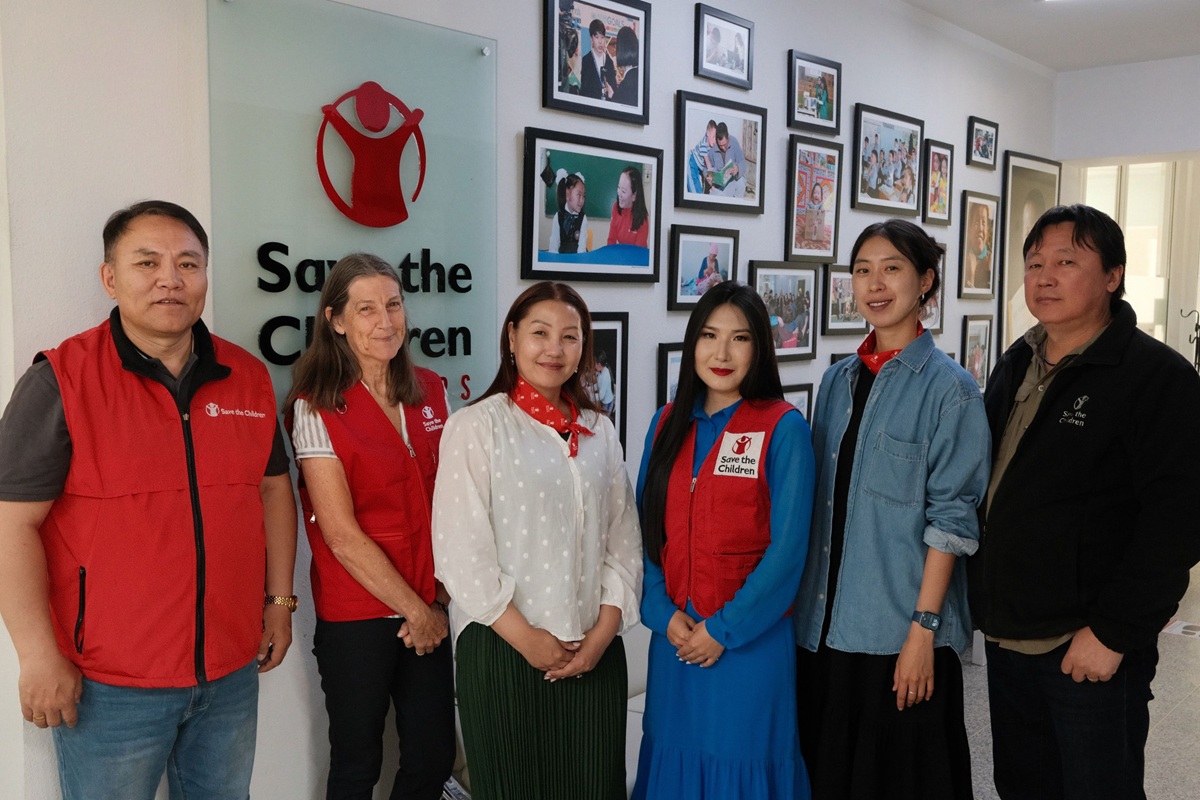
In recent years, Mongolia has seen extensive discussions about improving access to and quality of education for children with special needs. While every child should have the opportunity to grow and develop in an environment suited to their unique characteristics and needs, in reality, many issues remain unresolved, including the learning environment, methodology, and professional training. This has increased the need to adapt international best practices, practical solutions, and effective approaches to Mongolia’s education sector. In this interview, we spoke with Sharon Gorton, who came to work as a consultant expert through the Australian International Volunteer Program at Save the Children. She is a kindergarten teacher specializing in children with special needs and has 24 years of experience. Through the Australian International Volunteer Program, she worked for 3 years at the Autism Association in Laos and 4 years for World Vision, accumulating diverse experience. Sharon Gorton came to Mongolia in May of this year to share her expertise.

-You’ve been in Mongolia for quite some time now. How accessible is learning for children with developmental delays in our country? Has an appropriate environment been created?
-I visited several kindergartens within the framework of Save the Children project and observed the conditions. The classroom environments, toys, and materials were quite good. Teachers also pay great attention to supporting children’s development through play. It’s possible to observe developmental delays by watching what games a child chooses and how they play. For example, when a 6-year-old child plays with building blocks, are they constructing houses and buildings? Or are they simply stacking the blocks on top of each other or lining them up from back to front in a simple way? Developmental delays can be observed from these differences in play. However, parents should choose different games for their children to play depending on their age and developmental stages. For instance, if you give a 2-year-old child a coloring book and tell them to color without going outside the lines, it becomes a very difficult task. This is because a 2-year-old child is just beginning to explore paper and crayons so it is better to give them blank paper and letting them draw whatever they want is the right exercise for hand-eye coordination.
I was pleased that the kindergarten directors warmly welcomed children with special needs without hesitation. Inclusive education ensuring children with developmental delays are not t isolated from society, is extremely important. Parents also feel more comfortable when a kindergarten genuinely wants to support their children. Other children also understand from an early age that everyone is different. Understanding that it’s normal for some people to be unable to do certain things helps children develop empathy, avoid discrimination, build friendships, and learn to help others.
-What is developmental delay in children? Can you explain this to readers in simple terms?
-In Australia, children under 6 years old are not diagnosed with a disability. This is because at this age, the child’s physical and brain development is progressing rapidly. Even if early signs of developmental disability are observed, they are diagnosed as having developmental delay, not a disability. However, if symptoms of disability continue to be observed in a child after they reach six years old, a detailed diagnosis is made. But developmental delays should not be confused with disabilities. Many children who speak late or think slowly are often labelled as having developmental delays. In Australia, children enter school at age 6. If detailed examination diagnoses them as having developmental disabilities, an appropriate learning environment is created for them. Of course, if a child has delays, they receive treatment until age 6. For example, they receive treatment from specialists such as speech therapists and physical therapists. If the developmental delay doesn’t improve, the child is referred to a pediatrician for further diagnosis.
-In Mongolia, children are put through diagnostic screenings at 9, 18, and 36 months. How is screening for developmental delays conducted in Australia? What significance does this have?
-In Australia, within 2 weeks of a child’s birth, a health centre nurse visits each family and assesses 3 things. First, they examine the child’s physical condition, second, they conduct questionnaires checking the mother’s physical and mental wellbeing, and third, they check and evaluate the home environment. After this, children are regularly screened at 3, 6, 12, 24, and 36 months. The health center nurse also provides advice and information to parents. There is research showing that in Australia, 1 in 4 families experiences domestic violence. That’s why the center regularly conducts questionnaires with mothers and children. If it’s determined that a child has been subjected to violence or that parents need support with raising their child, the child may be referred to the child protection service.
-How do the health and education sectors work together with families and parents to detect children’s developmental delays early and eliminate delays?
-If a nurse observes that a child has signs of a delay, they discuss it with the parents and connect them with a specialist doctor. A pediatrician will confirm whether there is a delay or not. Also, in Australia, when a child reaches age 3, an autism screening questionnaire with 7 questions. Is completed. If they receive a high score on that questionnaire, they’re referred to a specialist doctor. If a child is diagnosed with developmental delay, the government provides 3 types of support. They give 1,000 Australian dollars annually, provide discounts on medical services, and provide food and assistive equipment. They also develop a comprehensive plan, depending on the child’s needs, the plan outlines what programs the child should join and they services they need until age 6. When the child reaches age 6 and enters school, they are reassessed. They evaluate the school environment, and if it’s inadequate, they renovate it according to standards. When entering school, teachers, doctors, and parents develop an individualized plan together outlining the child’s needs and how to support their learning. For example, they specify leanring adjustments for the child, like taking tests over a longer period of time, adjusting the angle of reading materials to suit their vision, etc.
As I mentioned earlier, inclusive education is very important. Like Mongolia, Australia has schools for children with special needs. Whether to educate at a regular school or a special school is the parents’ choice. However, children studying at regular schools have better adaptation and learning abilities than children studying at special schools. From my observations, Mongolia seems to pay more attention to fixing the child to make them like other children. For instance, if they have hearing impairment, they do cochlear implant surgery. But in Australia, rather than making that person normal, they pay more attention to creating environmental conditions where that person is accepted by society.
-Can you share some Australian best practices regarding creating environmental conditions that could be practically implemented in Mongolia?
-A child’s first social environment is the family. Children learn by watching their parents. So if you want your child to read books, you need to regularly read books yourself and set an example. You are your child’s first teacher. In the first 2,000 days after a child is born, or up to age 5, the most important brain development occurs. It’s most important to provide nutritious food, create a safe and healthy environment, and love and care for your child is essential. Also, playing with your child has an important impact on the child’s brain growth. At a young age, children develop intellectually and physically through play. However, you don’t necessarily need special toys – just spending time singing together and reading books to them is enough. Talking with your child every day has advantages such as enriching the child’s vocabulary and improving their ability to express themselves. So have regular conversations about simple topics like daily activities, weather, etc. When playing with different family members – father, grandfather, mother, grandmother – stimulates different parts of the child’s brain.
I think of Mongolia as a nation with rich history and culture. So you can read picture books and storybooks that introduce your rich history and customs. When playing together, give your child the freedom to make choices. Parents just need to be a little creative. Other than that, there are no special doctors or special toy magic tricks. Dedicating regular time for your child every day will show results in the child’s development.
-How can one observe whether a child has developmental delays at a young age? Are there general symptoms?
-Parents who are having their first child may lack experience, so they may not notice any delays. The simplest way is to notice other children of the same age. Are children the same age as your child walking, have they started talking and saying words? Parents should carefully observe whether their child can do these things. If you notice signs of a delay, don’t feel embarrassed or worried – go to your local clinic for an assessment. I learned that Mongolia has a pink booklet for mother-child communication. That booklet has specific questions about children’s abilities at different ages. If parents fill it out regularly, they can notice developmental delays early.
-You have 3 years of experience working at the Autism Center in Laos. How can one observe early whether a child has autism?
-Children with autism may not speak. They also prefer to have others do things for them, take someone’s hand to the cup or object to show they want it. Also, one of the most commonly observed signs of autism is that they like to arrange things in order. This could be lining up shoes, toys, etc. Also, children with autism like to play alone. Another common sign is not responding when called by name. They act as if they didn’t hear even though they heard. If these general signs are observed, you need to take your child to the local clinic without delay for an assessment. If diagnosed early, children can assess appropriate services. In Australia, autism is not classified as a developmental disability. Autistic people’s brains think and function just like ours—they simply work in a different way.
-If diagnosed with developmental delays, what can parents do?
-Parents are learning alongside their child. That’s why first of all, you should pay attention to your relationship with your child. Rather than trying to immediately treat and fix your child, spend time every day. In doing so, it’s appropriate to support your child’s development by dancing, singing, and interacting to activate different parts of the brain. Parents with children with developmental disabilities often experience more pressure and stress. That’s why it is important to pay attention to your own health, physical and emotional wellbeing. When you’re tired, angry, and stressed, take a short break and remind yourself that you’re not alone. When you’re tired, definitely ask for help from your family members.
-You have 6 months left to work in Mongolia. If it’s not a secret, can you share what work you plan to do during this time and when you return home?
-When I go home, the first thing I want to do is go to the beach. My next plan is to work as a consultant at an NGO in Mongolia. Right now I’m focusing more on providing advice and preparing books and brochures. By working at the proposed NGO, I’ll have the opportunity to work more closely with children with special needs. I’m very happy about this.