


Save The Children is implementing a school lunch program at Tudevtei Soum School, Zavkhan Province
Save the Children, with funding from the U.S.-based The Denan Project, has been implementing a health project in Tudevtei Soum, Zavkhan Province, since 2025. As part of this project, a fully equipped new dental cabinet was established and became operational at the Soum health center in April 2025. In addition, a school-based Health Club was established and launched at the high school to promote public health education for students.
The project introduced a school lunch program for middle and high school students at Tudevtei Soum School in March 2026, with support from Save the Children.
Mongolia’s school feeding program was first introduced in 2006. The adoption of the 2019 Law on Food Production and Services at Schools further strengthened the program, and in n 2021, it was expanded to provide hot meals for students in grades 1–5. The per-student budget has also increased from 1,500 MNT to 2,500 MNT in 2025.
During visits to Tudevtei Soum in 2025, staff from Save the Children and the Denan Project met with middle and high school students and identified common problems, including students attending school without breakfast and experiencing hunger during lessons. These factors were found to negatively affect students’ learning and academic performance. As a result, in collaboration with the school, Save the Children initiated Mongolia’s first pilot lunch program, specifically targeting middle and high school students. Within the project framework, parents contribute 1,000 MNT per child per day and the remaining 1,500 MNT is covered by The Denan Project.
The school supports the program by covering additional electricity costs for meal preparation, strengthening the cooks’ capacity, and providing additional incentives for kitchen and administrative staff responsible for food procurement.
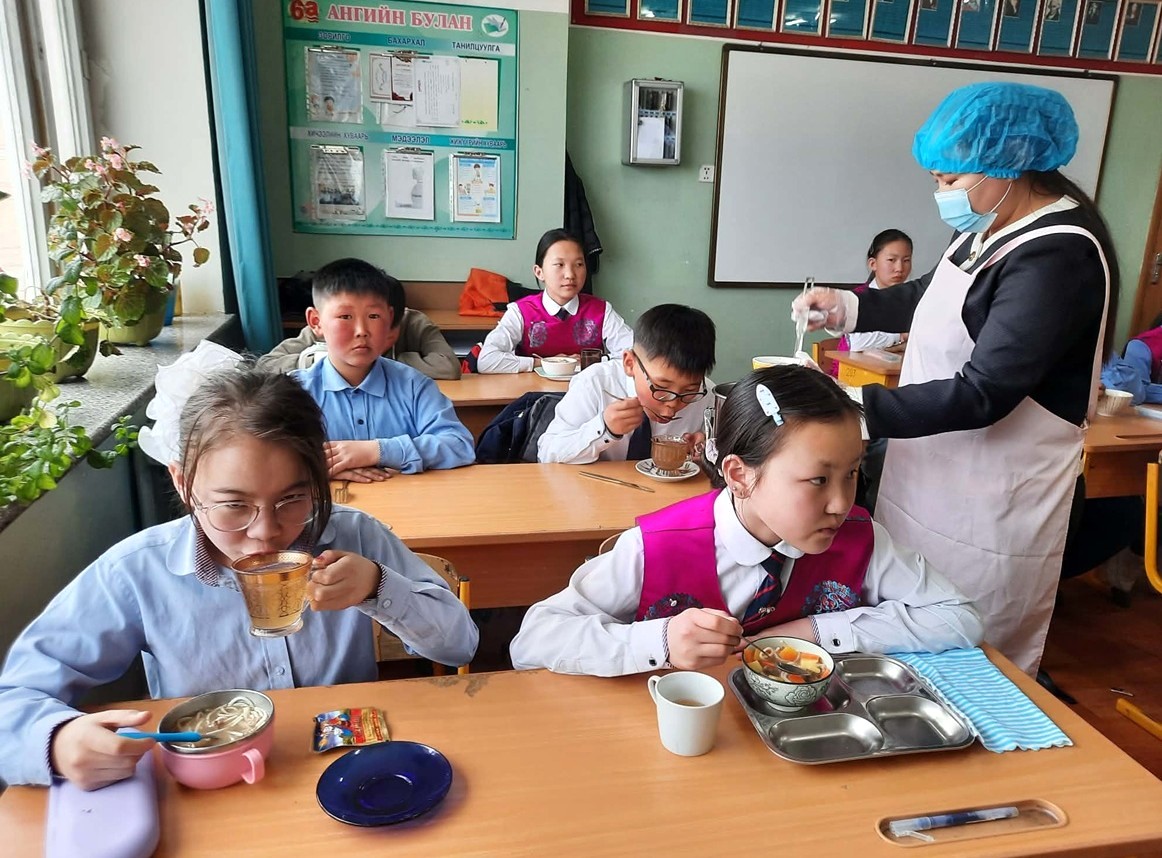
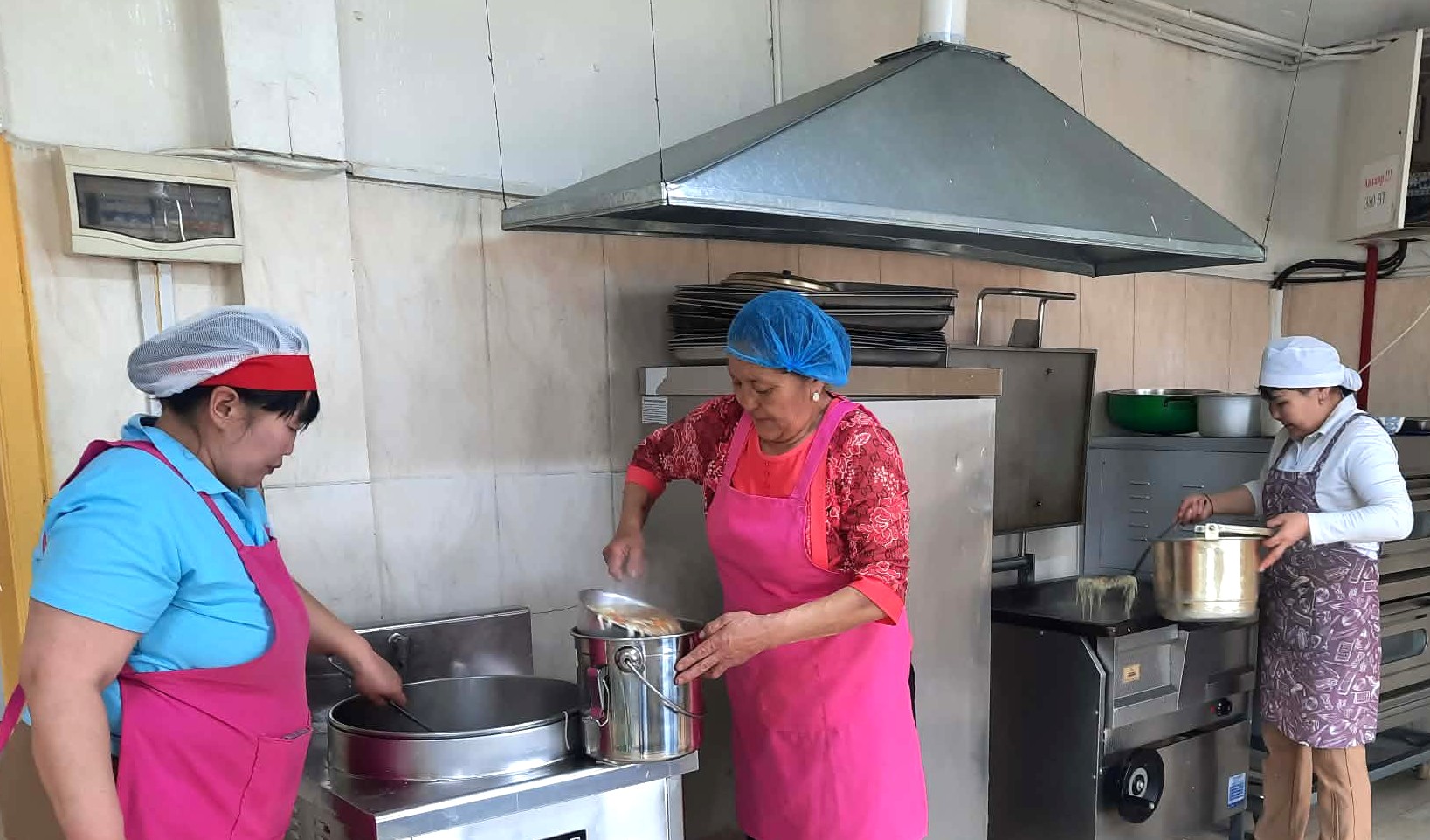
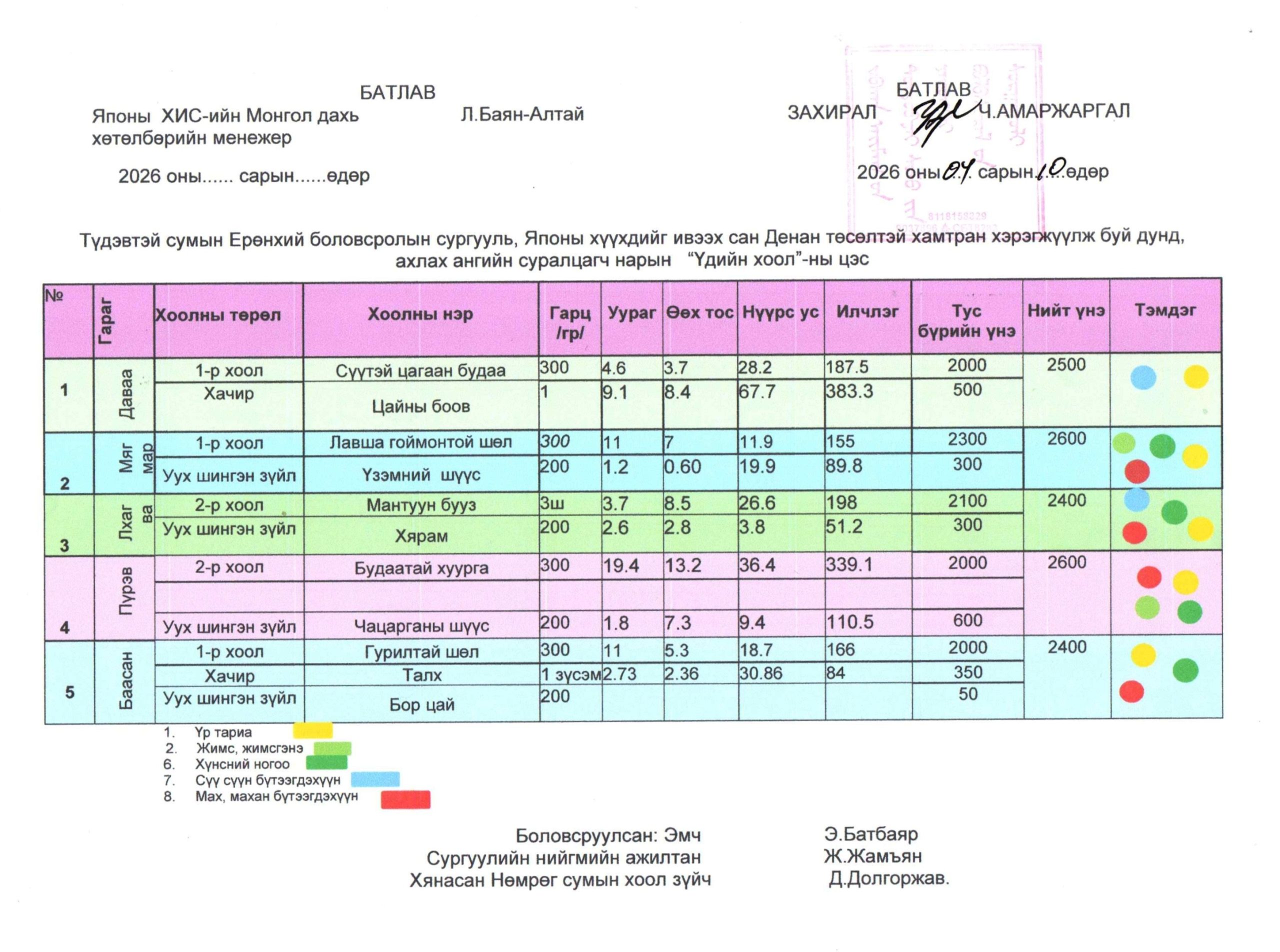
The school currently has 310 students, of whom 190 (9 classes) in grades 6–12 are participating in the lunch program. The weekly menu highlights include: milk porridge and pastries on Mondays; noodle soup and raisin juice on Tuesdays; steamed dumplings (mantuun buuz) and milk tea on Wednesdays; stir-fried rice and sea buckthorn juice on Thursdays; Mongolian traditional noodle soup, bread, and tea on Fridays.
Feedback on the lunch program
Ch. Amarjargal, School principal of Tudevtei soum school, shared, “Our staff is united in implementing the lunch program. Teachers, cooks, accountants, doctors, and social workers all actively participate, reflecting our shared commitment.”
Jamyan, School social worker of Tudevtei soum school: “This program improves adolescent health, increases student engagement, prevents risky behaviors, reduces absenteeism, and strengthens collaboration between parents and the school.”
E. Batbayar, School Doctor of Tudevtei Soum School: “Building on these efforts, meals are prepared in line with food safety, hygiene, and nutritional standards set by the Law on Food Production and Services at Schools. Students arrive at school at 8:00 a.m. and eat lunch between 11:00 and 11:30 a.m. Parents have received the program very positively.”
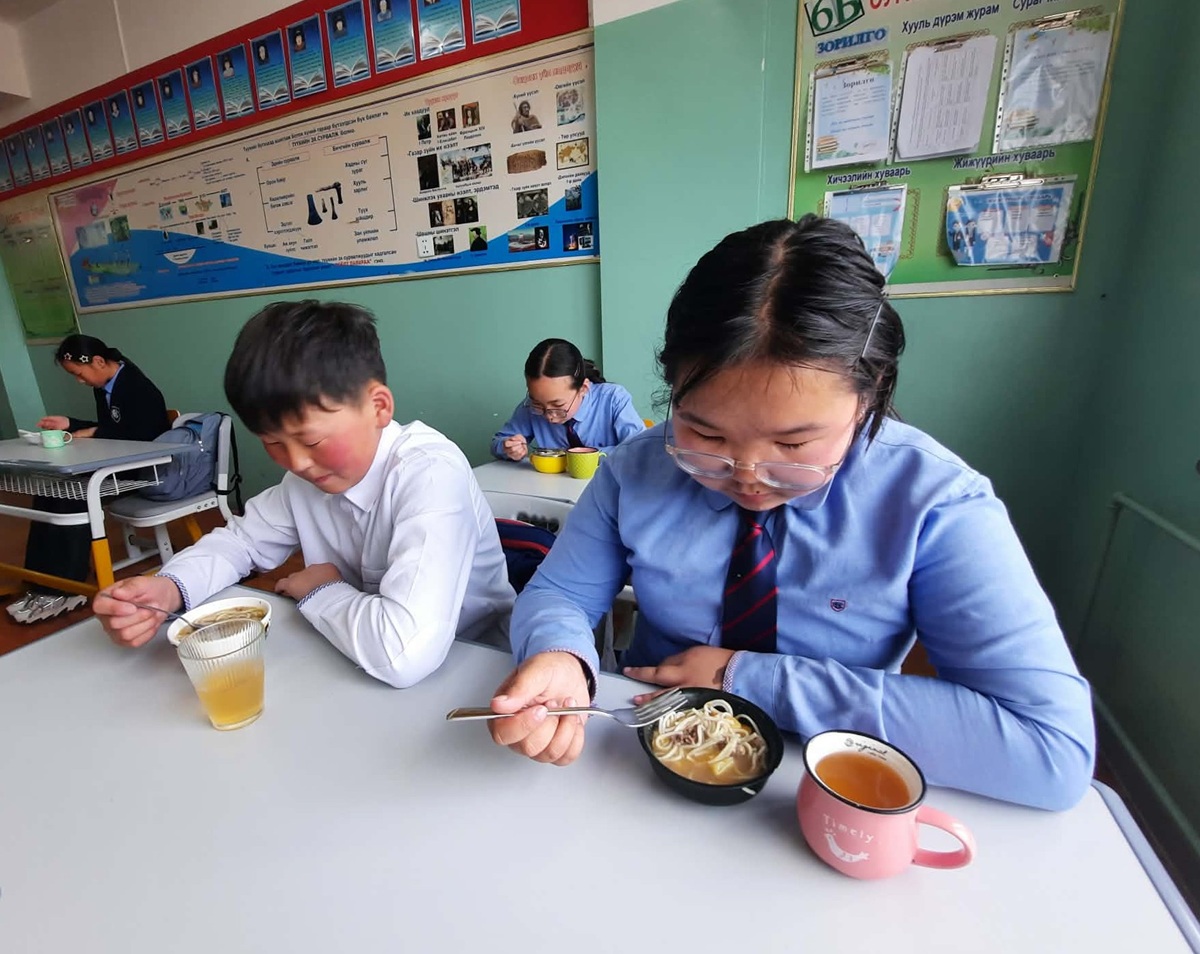
Ch. Uranbileg Student of Grade 7 at Tudevtei Soum School: “From a student’s viewpoint, we used to feel hungry during the lesson and often had headaches and stomachaches. Now, after eating lunch, we can concentrate much better.”
Otgontur, Student of Grade 11 at Tudevtei Soum School: “Sometimes we came to school without breakfast. Now it’s great to eat at school every day. The food is tasty and filling.” Before the project, students rarely visited the canteen, as lunch was expensive and lunchtime was limited, so we often went hungry.
Purevdulam, local resident of Tudevtei Soum: “Parents are very grateful for the school lunch project for middle and high school students. Many students used to arrive at school hungry, even though the Tudevtei Soum school is in the center of the Soum. Now they are more active, and their academic performance has improved.” On behalf of the students’ parents, we sincerely thank you for the Denan project.
Naranzaya, local resident of Tudevtei Soum: A student easily gets hungry when they are transitioning from elementary school to middle school. Because they used to have regular lunch at elementary school and need more nutrition as they grow up. For example, my son studies in the middle class. “In support of this view, paying 1,000 MNT per day for a nutritious hot lunch is not a problem for parents. Some parents give 100,000 tugriks per month for their children’s lunches; the children spend the money on unhealthy, sweetened products, biscuits, and snacks. It’s much better than spending more money on unhealthy snacks.”
The project is being implemented in partnership with Tudevtei Soum School until December 31, 2026. At the end of the project, a survey will be conducted, and the results will be presented to the local authorities.
Additional information
School lunch programs offer significant benefits for children’s health, growth, and learning. Nutritious meals are vital for children’s development, and research shows that hot school meals enhance educational outcomes. According to the World Food Program, these programs increase enrollment by about 9 percent, improve attendance, reduce dropout rates, and boost students’ concentration, motivation, and academic performance. By addressing hunger, school meal programs support learning, promote health, and provide energy. They also deliver social and economic benefits, particularly for low-income families, by reducing food expenses and offering social protection. Overall, research confirms that school meal programs improve nutrition, strengthen education, expand access, and support economic development.