


More Than a Meal: How School Lunches Are Making a Difference in Rural Mongolia
Why extend school meals to older students?
Mongolia introduced its School Tea/Meal Programme for primary school children in the 2006–2007 academic year and expanded it into a national School Lunch Programme in 2021. The national programme currently serves students in Grades 1–5. Older students, however, do not benefit from the same provision—even though they may face similar challenges accessing a nutritious meal during the school day.
A new initiative at the general education school in Tudevtei soum, Zavkhan Province, is helping to address this gap. Supported by the US-based DENAN Project and implemented by Save the Children as part of a local health project launched in 2025, the school lunch initiative began in March 2026 and provides meals to students in Grades 6–12. The need was clear from a survey of 190 students in Grades 6–12 conducted before the programme began. Some 70% said they often felt hungry during school hours, while 67.72% reported not eating during their lunch break. Only 5.82% brought food from home. Students cited a lack of nearby food outlets, limited time for families to prepare meals and difficulties bringing food to school.
Hunger was accompanied by other challenges: more than 91% of respondents said they often felt tired on school days, 88.36% reported some difficulty concentrating in class, and 83.96% experienced headaches or weakness to some degree. Meanwhile, 37.44% reported missing school about once a month. Together, these findings highlighted the importance of ensuring that students have access to food during the school day.
Better attendance and stronger engagement in learning
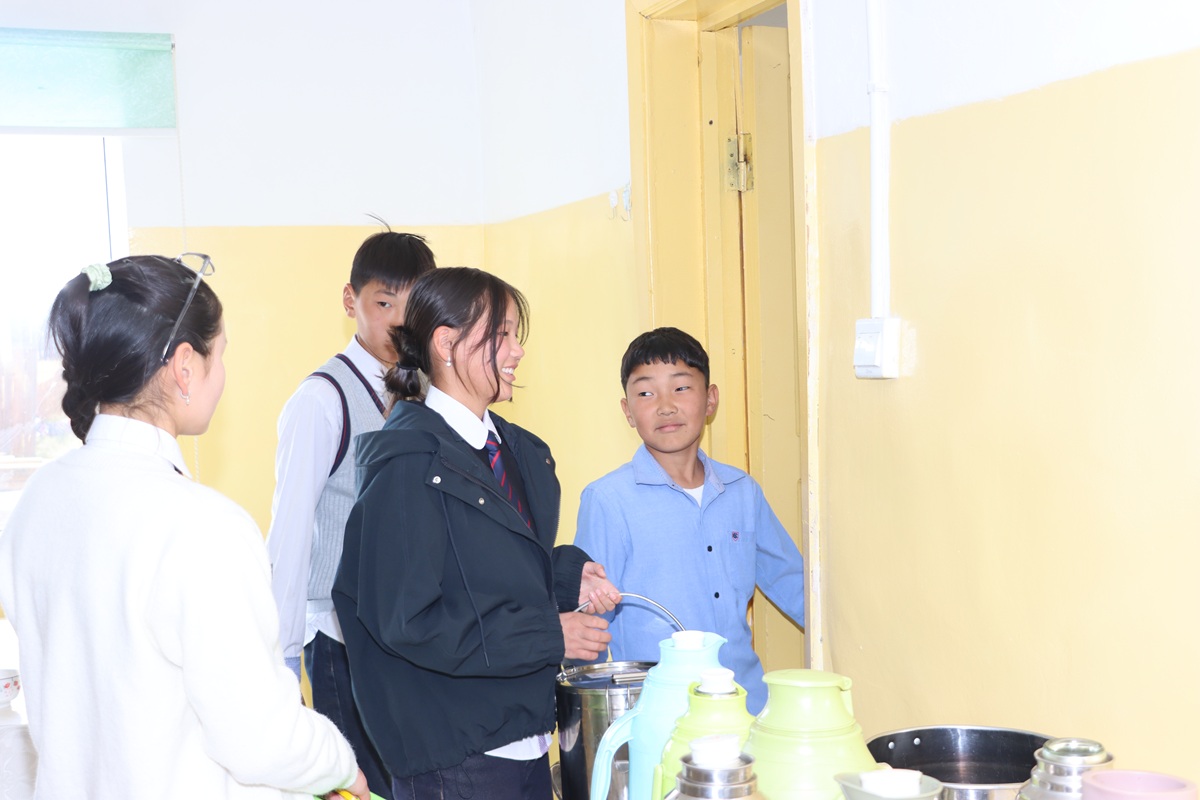
At Tudevtei school, the break after the third lesson has become a moment students eagerly anticipate. The aroma of freshly prepared food fills the air as students help bring in the meals. With the weekly menu shared in advance, everyone knows what to expect. Although introduced only recently, lunch is already becoming an established part of the school day.
The school has 315 students, of whom 200 in ten classes across Grades 6–12 are participating in the programme.
“No one in my class is missing lessons now. Students are understanding their lessons better and doing better at school,” says Ch. Uranbileg, a Grade 8 student. “We want the lunch programme to continue. The food is delicious, especially the meat dishes.” Fellow Grade 8 student U. Naranmunkh adds: “Thank you to the cooks for preparing such delicious meals, and to everyone involved in the project.”
Before the programme, students often arrived without breakfast, became hungry or tired during lessons, or left school to find something to eat, sometimes returning late or going straight home. School staff report that these problems have eased considerably. Principal Ch. Amarjargal has observed greater participation in lessons and improvements in student achievement since the meals were introduced.
According to results reported by the school, academic performance measured through examinations and external assessments has improved by 5%, while student attendance has increased from 62.6% to 100%. These are encouraging early results from the initiative.
Delivering the programme is a school-wide effort. Class teachers help distribute and transport meals, prepare utensils and maintain hygiene standards, while the school doctor, social worker, accountant, storekeeper and other staff all contribute. In a survey conducted after the programme began, 80% of students said they received their meals in a clean and comfortable environment, and 79% gave positive feedback on the hygiene of the meal service and utensils.
Parents welcome the initiative and support its continuation
The school doctor and social worker develop the menu, which is reviewed by a school nutritionist to assess ingredients, protein and energy content. The school doctor monitors meals daily, while a parents’ council conducts weekly checks and records observations about food quality, ingredients and taste.
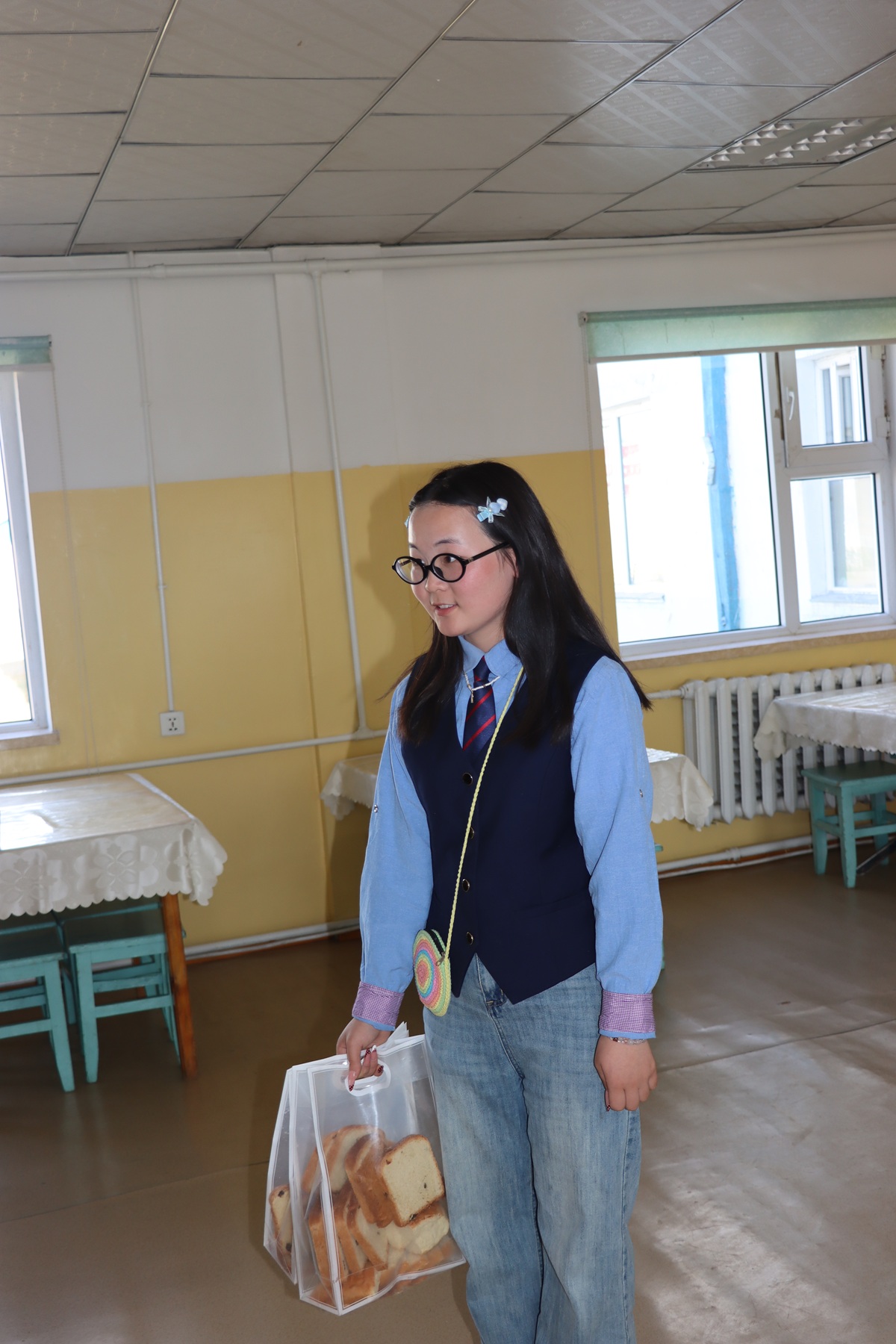
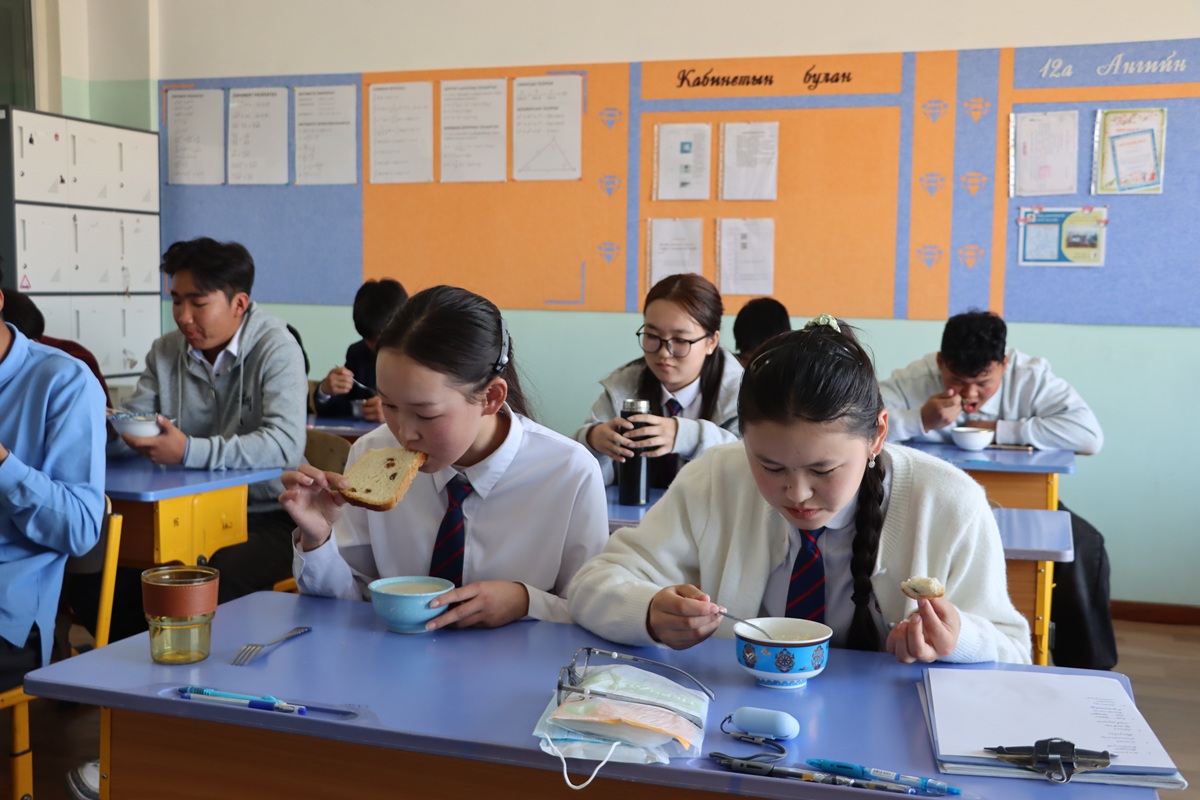
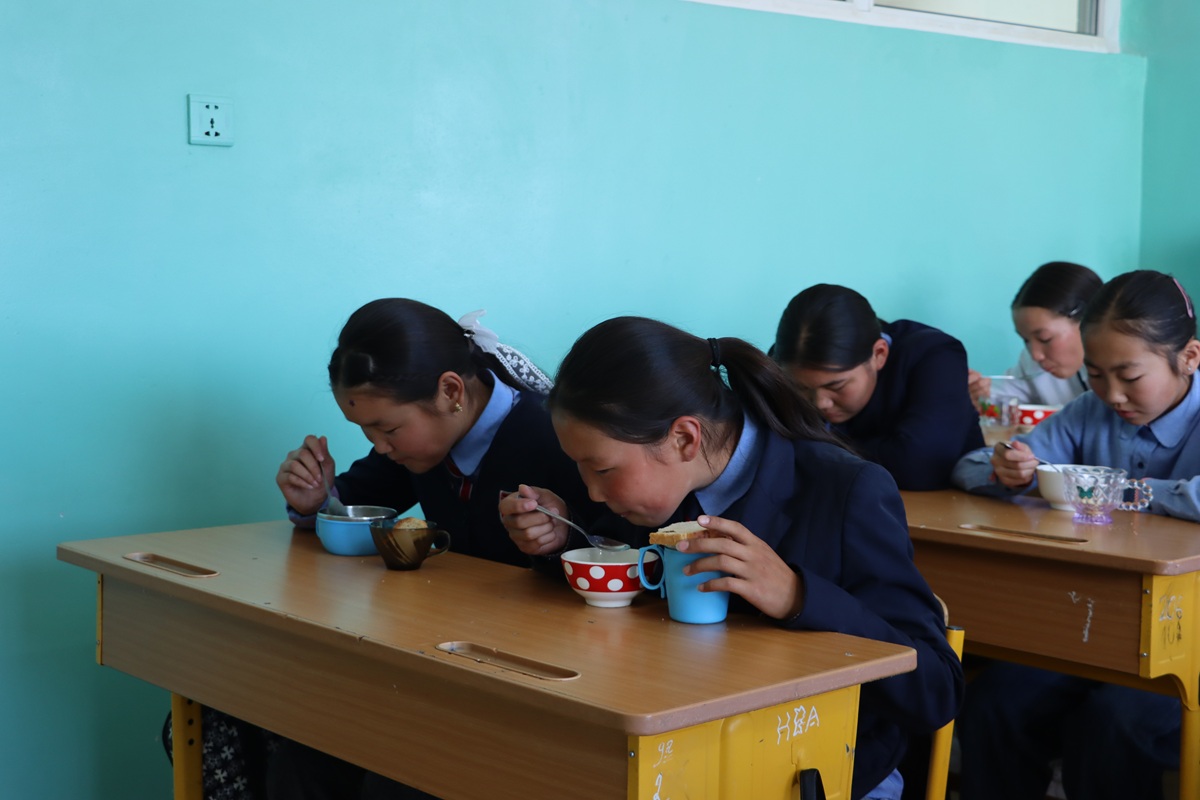
Meals vary throughout the week, with dishes such as rice soup with meat and offal, milk-based grains with raisin bread, stir-fried noodles, meatball soup, and pastries served with yoghurt. The menu includes meat, grains, dairy products and fruit.
The financing model is shared: the project pays 60% of the daily meal cost per child, while parents contribute the remaining 40%.
T.Uuganbyamba, a parent from Tudevtei whose children are in Grades 4, 10 and 12, says that two of her children benefit from the programme. “I pay close attention to my children’s health. They are at school from 8:30 a.m. until 1:35 p.m. Before lunches were provided, many children went to school without breakfast and stayed hungry until they returned home. Now they have a meal after the third lesson, which is much better for their wellbeing. They look forward to the different meals each day. Parents have no difficulty covering 40% of the cost, and we fully support the programme.”
Sustaining the initiative beyond project funding will require a longer-term financing approach. One option is to explore a contribution from the soum budget alongside continued parental support. Stronger parent involvement can also improve oversight of food hygiene and quality, reduce the daily burden of preparing packed meals, help households plan spending and reassure families that their children will not be hungry at school.
A promising model for other schools
A reliable hot meal does more than address hunger. It can help children concentrate, participate in class and maintain their wellbeing as they grow. At Tudevtei school, the positive response from students, parents and education officials is drawing attention to a model that could be introduced elsewhere.
Parents are involved in monitoring food quality and providing feedback, and the school reports that its meals meet the food safety, hygiene and nutritional requirements set out in Mongolia’s legislation on school food production and services. The Zavkhan Provincial Education Department is considering piloting the approach in other schools.
“Students in the middle and upper grades at Tudevtei school now receive a hot meal every day, and parents have welcomed the initiative,” says D.Byambatsogt, Head of the Zavkhan Provincial Education Department.
For students accustomed to receiving school meals in primary grades, the transition to secondary school can mean a return to hunger and fatigue during lessons. The Tudevtei experience demonstrates the potential benefits of extending access to nutritious food to adolescents: stronger engagement in learning, better wellbeing and closer cooperation between families and schools. Students and parents have expressed their appreciation to the Save the Children Mongolia and DENAN Project and those making the programme possible.